Business book
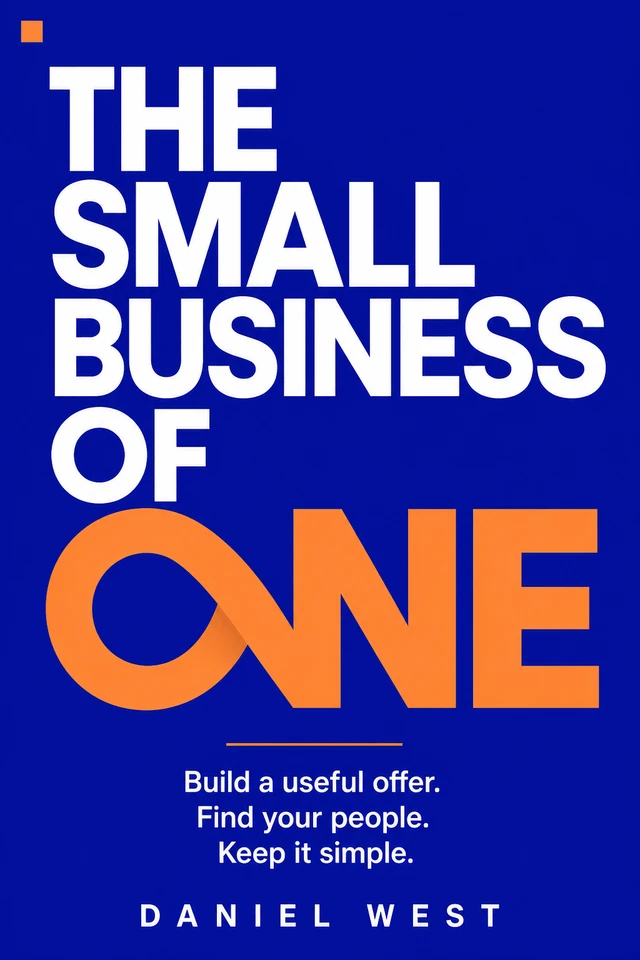
The Small Business of One
The cover and opening pages of a business book generated with Bookbind.
“A practical business book for independent professionals about building a useful offer and finding customers, with bold white and apricot typography on an electric-blue cover”
The pages
Read the opening
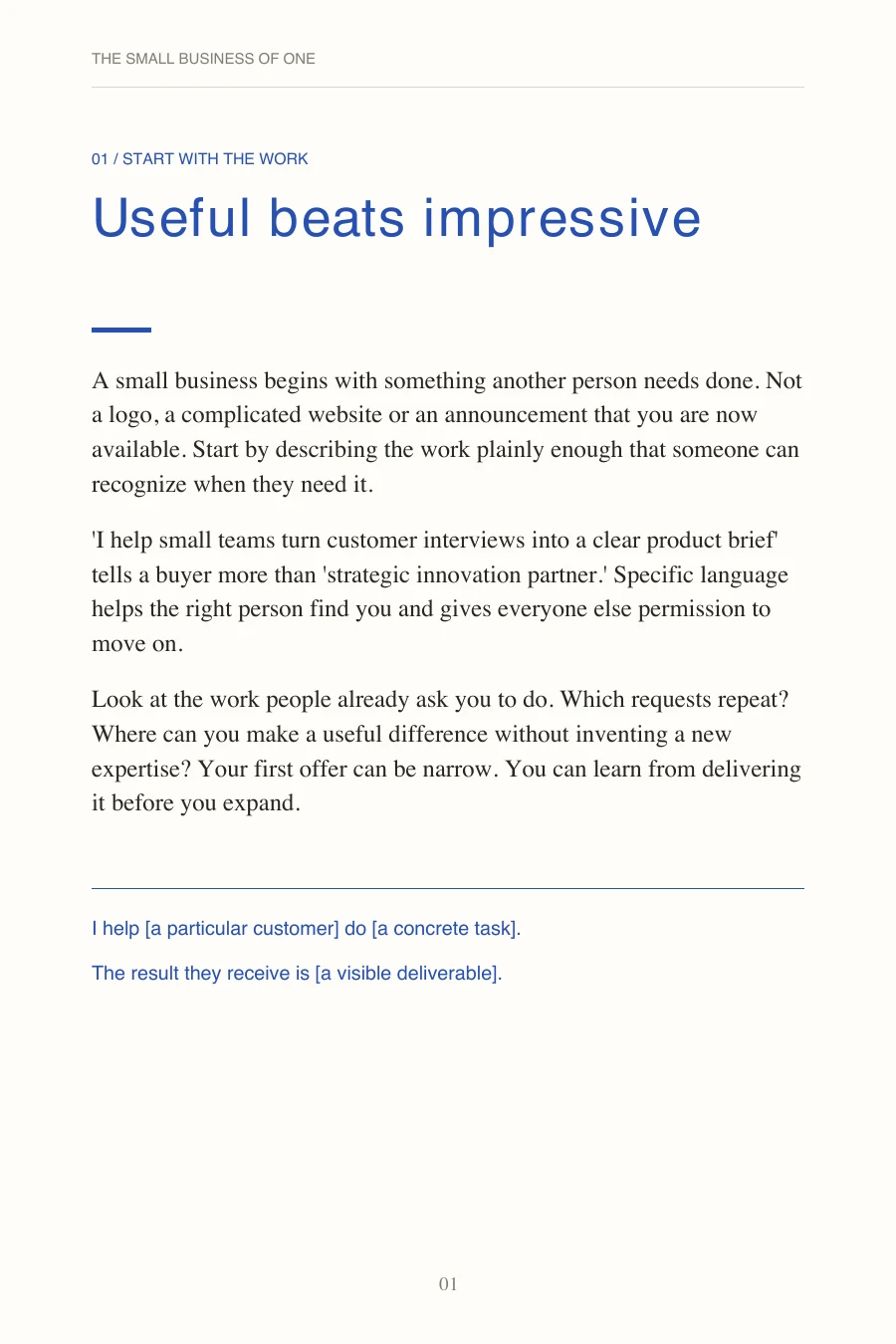
Useful beats impressive
A small business begins with something another person needs done. Not a logo, a complicated website or an announcement that you are now available. Start by describing the work plainly enough that someone can recognize when they need it.
'I help small teams turn customer interviews into a clear product brief' tells a buyer more than 'strategic innovation partner.' Specific language helps the right person find you and gives everyone else permission to move on.
Look at the work people already ask you to do. Which requests repeat? Where can you make a useful difference without inventing a new expertise? Your first offer can be narrow. You can learn from delivering it before you expand.
I help [a particular customer] do [a concrete task].
The result they receive is [a visible deliverable].
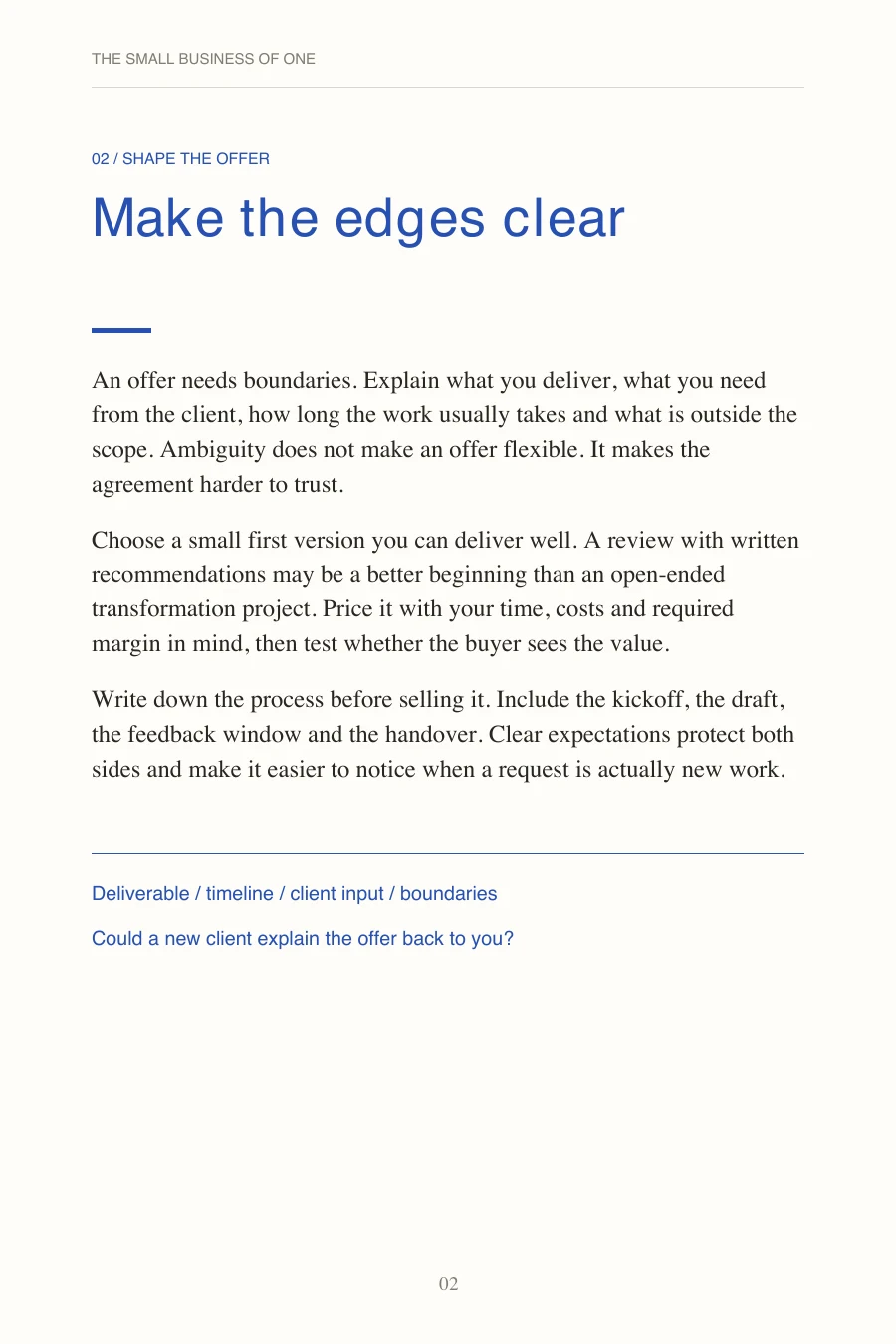
Make the edges clear
An offer needs boundaries. Explain what you deliver, what you need from the client, how long the work usually takes and what is outside the scope. Ambiguity does not make an offer flexible. It makes the agreement harder to trust.
Choose a small first version you can deliver well. A review with written recommendations may be a better beginning than an open-ended transformation project. Price it with your time, costs and required margin in mind, then test whether the buyer sees the value.
Write down the process before selling it. Include the kickoff, the draft, the feedback window and the handover. Clear expectations protect both sides and make it easier to notice when a request is actually new work.
Deliverable / timeline / client input / boundaries
Could a new client explain the offer back to you?
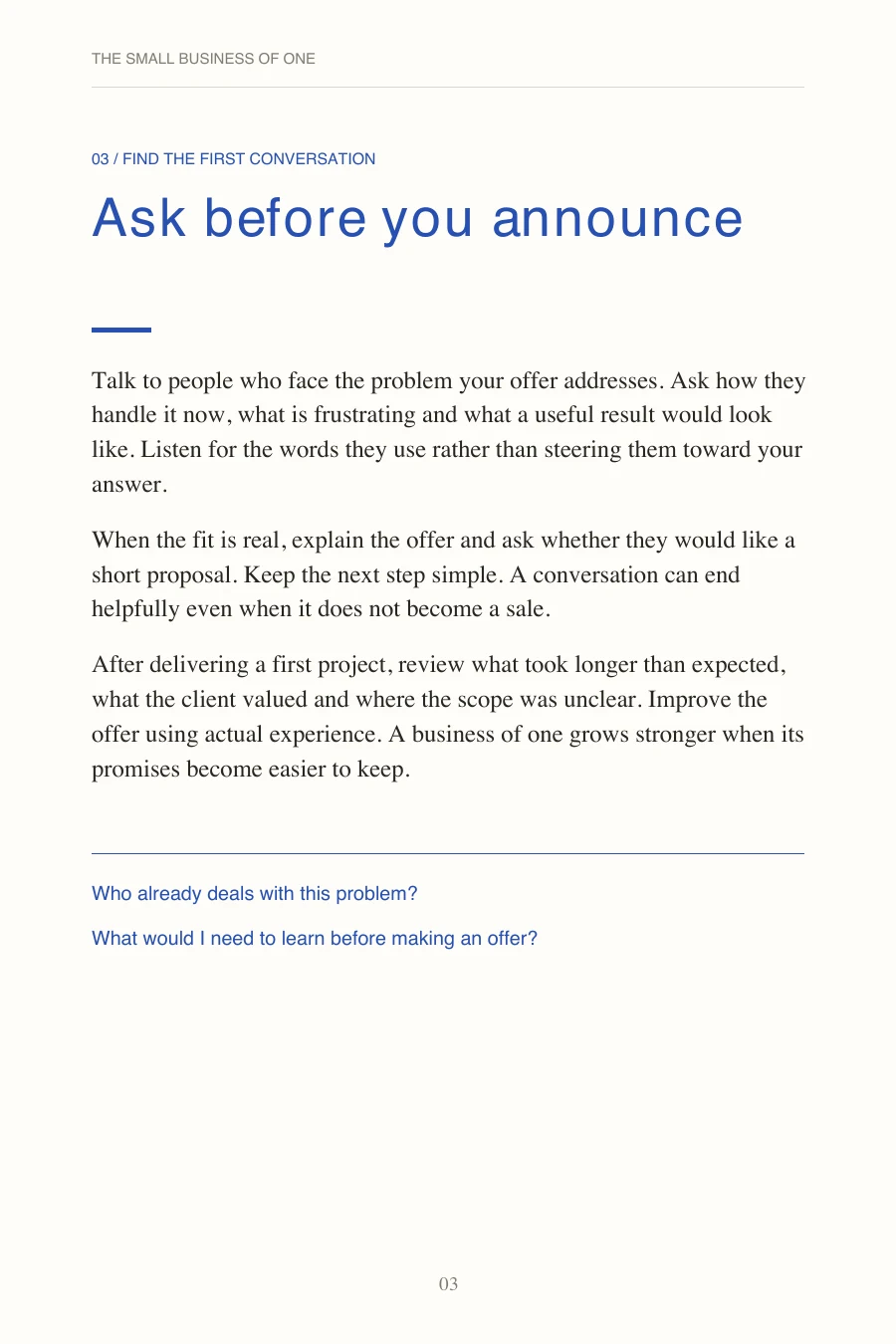
Ask before you announce
Talk to people who face the problem your offer addresses. Ask how they handle it now, what is frustrating and what a useful result would look like. Listen for the words they use rather than steering them toward your answer.
When the fit is real, explain the offer and ask whether they would like a short proposal. Keep the next step simple. A conversation can end helpfully even when it does not become a sale.
After delivering a first project, review what took longer than expected, what the client valued and where the scope was unclear. Improve the offer using actual experience. A business of one grows stronger when its promises become easier to keep.
Who already deals with this problem?
What would I need to learn before making an offer?
Start with this brief or one of your own. Bookbind plans the book, writes it, draws it if it needs pictures, and packs print-ready files for Amazon KDP. You see the whole plan before a credit is spent.