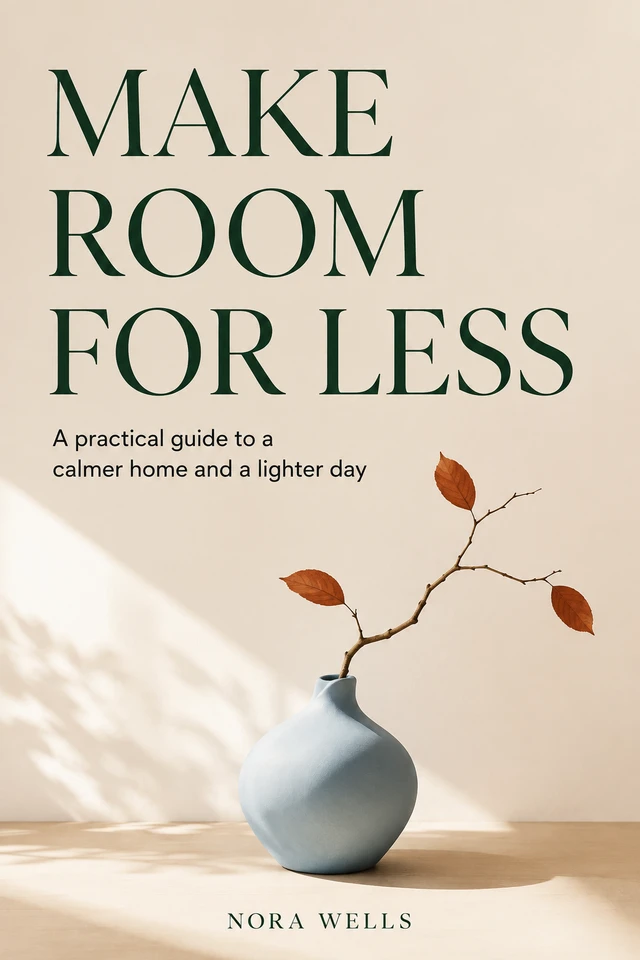
Mini guide
Make Room for Less
The cover and opening pages of a mini guide generated with Bookbind.
“A practical mini guide to creating a calmer home through small decluttering decisions, with an ivory cover, forest-green typography and a single sculptural ceramic vase”
The pages
Read the opening
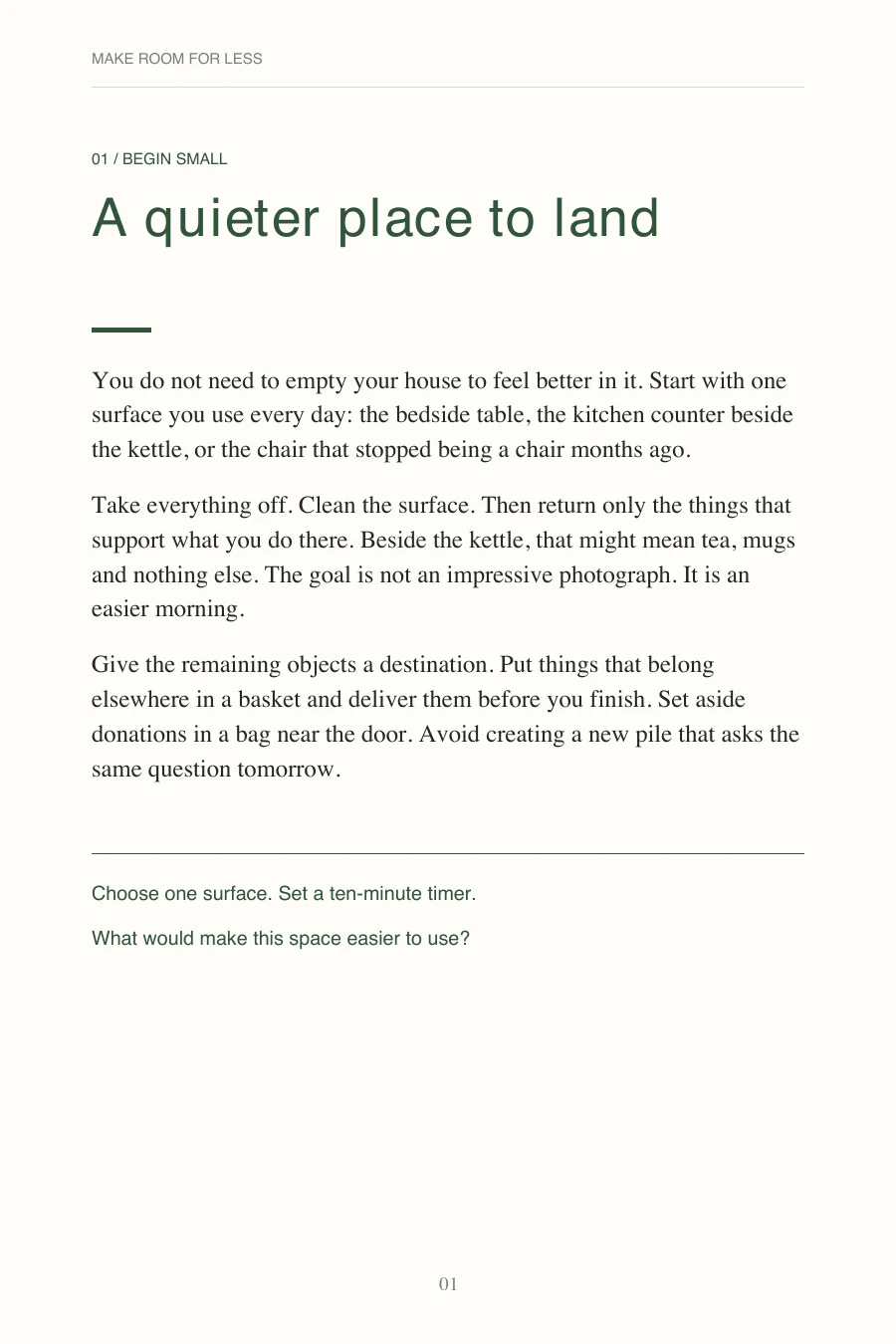
A quieter place to land
You do not need to empty your house to feel better in it. Start with one surface you use every day: the bedside table, the kitchen counter beside the kettle, or the chair that stopped being a chair months ago.
Take everything off. Clean the surface. Then return only the things that support what you do there. Beside the kettle, that might mean tea, mugs and nothing else. The goal is not an impressive photograph. It is an easier morning.
Give the remaining objects a destination. Put things that belong elsewhere in a basket and deliver them before you finish. Set aside donations in a bag near the door. Avoid creating a new pile that asks the same question tomorrow.
Choose one surface. Set a ten-minute timer.
What would make this space easier to use?
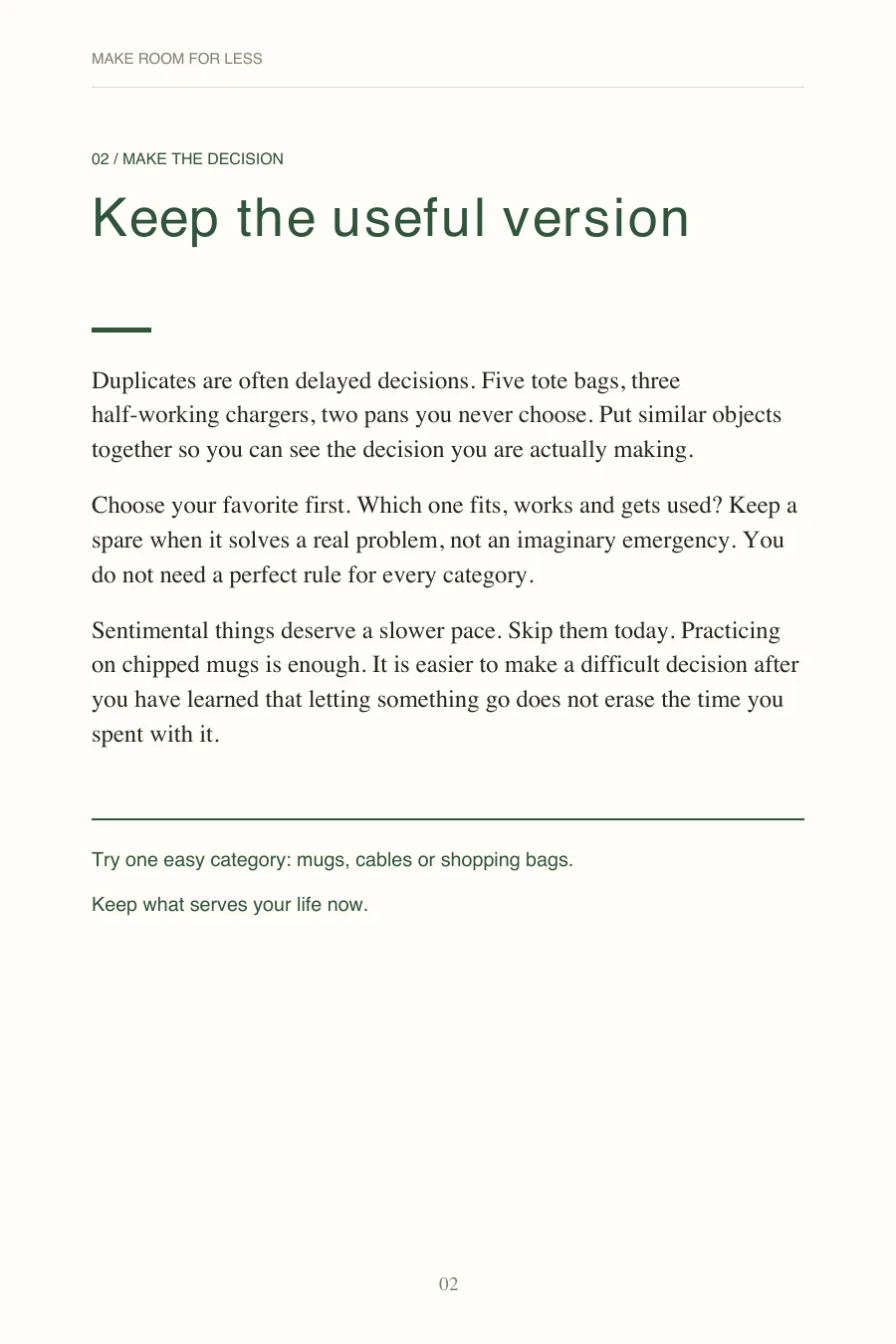
Keep the useful version
Duplicates are often delayed decisions. Five tote bags, three half-working chargers, two pans you never choose. Put similar objects together so you can see the decision you are actually making.
Choose your favorite first. Which one fits, works and gets used? Keep a spare when it solves a real problem, not an imaginary emergency. You do not need a perfect rule for every category.
Sentimental things deserve a slower pace. Skip them today. Practicing on chipped mugs is enough. It is easier to make a difficult decision after you have learned that letting something go does not erase the time you spent with it.
Try one easy category: mugs, cables or shopping bags.
Keep what serves your life now.
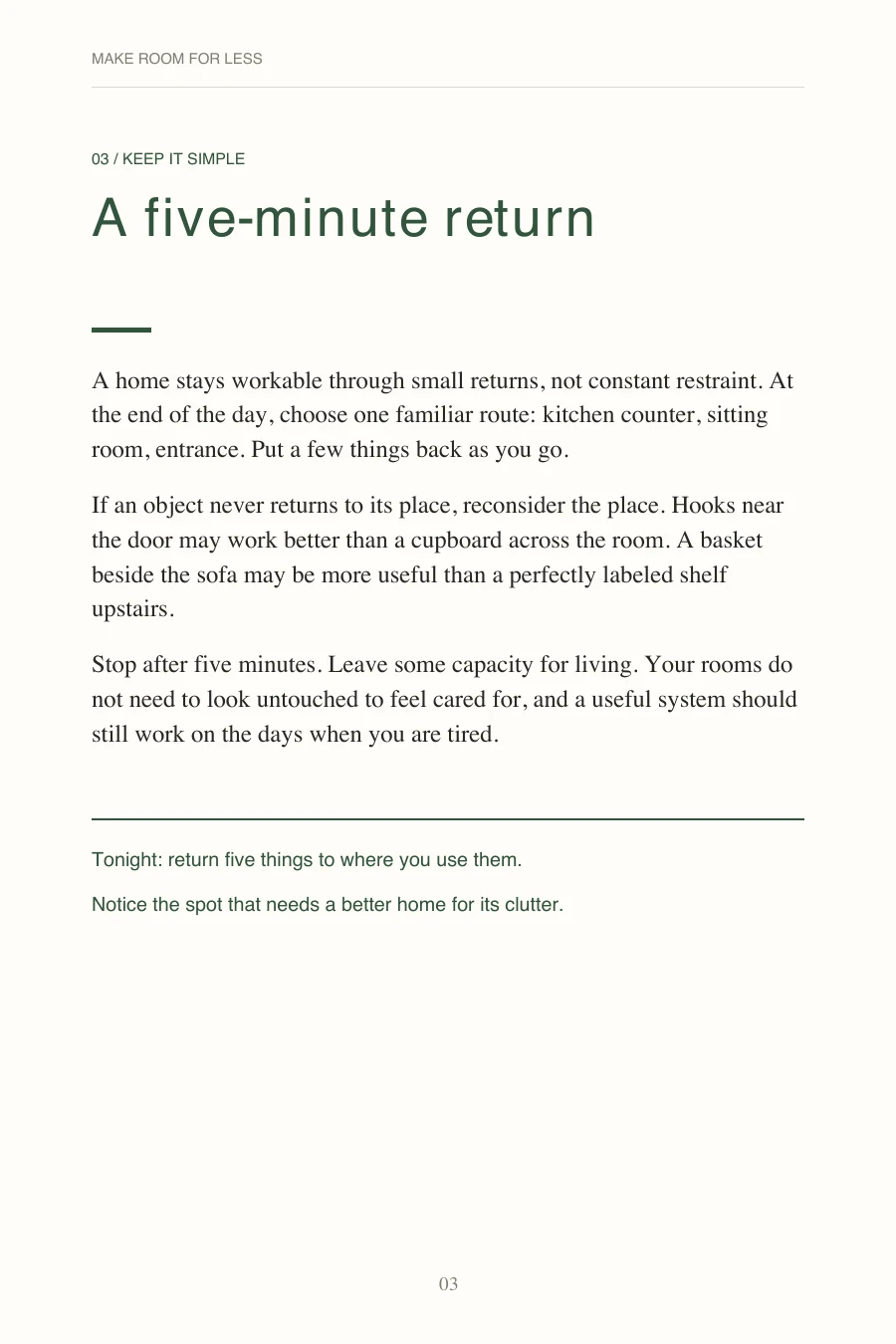
A five-minute return
A home stays workable through small returns, not constant restraint. At the end of the day, choose one familiar route: kitchen counter, sitting room, entrance. Put a few things back as you go.
If an object never returns to its place, reconsider the place. Hooks near the door may work better than a cupboard across the room. A basket beside the sofa may be more useful than a perfectly labeled shelf upstairs.
Stop after five minutes. Leave some capacity for living. Your rooms do not need to look untouched to feel cared for, and a useful system should still work on the days when you are tired.
Tonight: return five things to where you use them.
Notice the spot that needs a better home for its clutter.
Start with this brief or one of your own. Bookbind plans the book, writes it, draws it if it needs pictures, and packs print-ready files for Amazon KDP. You see the whole plan before a credit is spent.