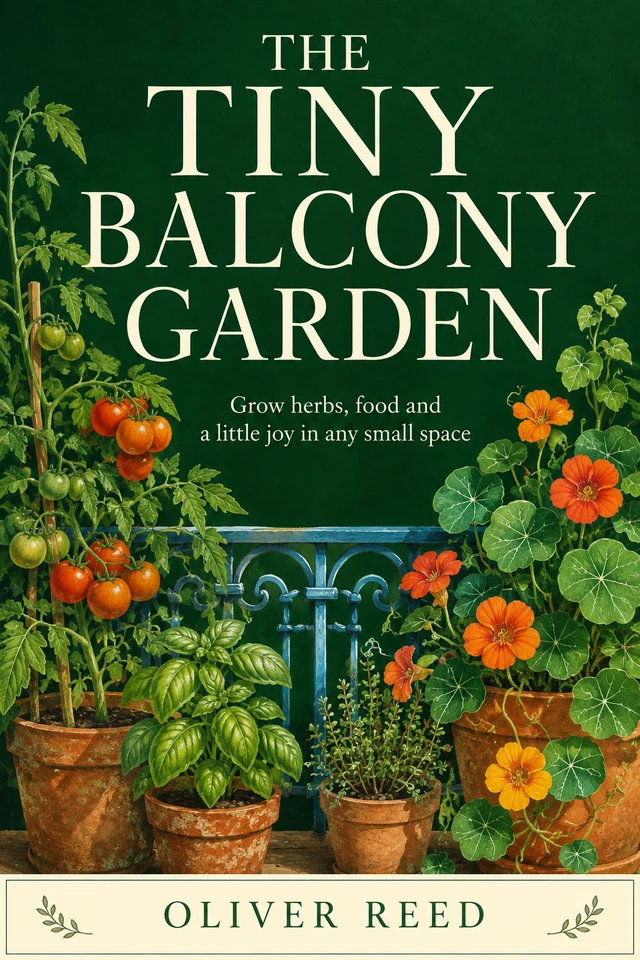
How-to guide
The Tiny Balcony Garden
The cover and opening pages of a how-to guide generated with Bookbind.
“A beginner's step-by-step guide to growing herbs and food on a tiny balcony, with a fern-green cover, ivory serif title and botanical illustrations of tomatoes, basil and terracotta pots”
The pages
Read the opening
Start with the light
Before buying a plant, spend a day noticing your balcony. Where does direct sunlight fall in the morning, at midday and in the afternoon? Write down what you see instead of relying on the direction the balcony faces.
A wall, a neighboring building or an overhead balcony can change the light dramatically. Wind matters too. A sunny corner that feels sheltered to you may still dry a small pot in a few hours.
Choose plants for the space you have. Many fruiting crops need generous direct light. Leafy crops and some herbs can tolerate less. Check the variety's growing instructions and your local season before committing to a basket of seedlings.
Morning light / midday light / afternoon light
Note the windiest corner and the easiest watering route.
Three pots are enough
Start with a small, manageable collection. One herb you cook with, one leafy crop and one plant you simply enjoy is plenty for a first season. Pick containers with drainage holes and saucers that you can empty.
Use a potting mix intended for containers. Match the pot size to the mature plant, not just the seedling in your hand. A large tomato needs far more root space than a small thyme plant.
Keep heavy containers away from unstable railings and respect your building's load and attachment rules. Position pots where you can reach them comfortably. A garden is easier to care for when watering does not require moving three chairs.
My first three plants and their container sizes
Buy for the mature plant, not the smallest price tag.
Check, then water
A calendar reminder can tell you to look at your plants. It cannot tell you whether they need water. Check the potting mix with a finger and learn the difference between a damp pot and a dry one.
When a plant needs water, water the mix slowly and evenly until excess drains out. Empty standing water from saucers. On hot or windy days, check more often. Smaller containers usually dry faster.
Spend a minute looking at leaves, new growth and the underside of stems. Catching a problem early is easier than rescuing a neglected plant. Keep short notes: what you watered, what you harvested and what you would change next season.
Today's check: moisture, leaves, new growth
The best gardening habit is paying attention.
Start with this brief or one of your own. Bookbind plans the book, writes it, draws it if it needs pictures, and packs print-ready files for Amazon KDP. You see the whole plan before a credit is spent.