A paperback has a flexible card cover and costs less to print, ship and buy; a hardcover has a rigid cover and lasts longer, so it sells for more and makes a better gift or keepsake. On Amazon KDP, a 300-page hardcover costs $9.25 to print against $4.60 for the paperback, so the paperback is the cheaper edition to sell and the hardcover an extra for readers who want one.
We make Bookbind, an AI book creator that produces KDP-ready print files. Every KDP figure below comes from Amazon's own help pages, checked on October 25, 2026, and links to its source; Bookbind's price comes from its own price list on the same day.
What is the difference between a paperback and a hardcover?
The cover. A paperback's cover is heavy paper stock folded around the pages and glued at the spine. A hardcover's cover is made of rigid boards wrapped in printed paper or cloth, which protects the pages and lets the book stand up straight on a shelf for decades. Everything else follows from that:
| Paperback | Hardcover | |
|---|---|---|
| Cover | Flexible card, glued at the spine | Rigid boards, often with a dust jacket |
| Durability | Spines crease and corners bend with use | Built to last; better for gifts and shelves |
| Weight and size | Lighter and easier to carry | Heavier and bulkier |
| Price to buy | Lower | Higher |
| Best for | Everyday reading, travel, series readers | Gifts, keepsakes, collectors, reference books |
"Hardback" and "hardcover" mean the same thing; hardback is the more common word in British English. Paperbacks come in two traditional kinds: the trade paperback, the size of a hardcover or close to it, and the smaller mass-market paperback you'd find at an airport. KDP's standard paperback sizes start at 5 x 8 in, so a KDP paperback is a trade paperback.
Is a hardcover better than a paperback?
For durability and as a gift, yes; for price, portability and everyday reading, the paperback wins. A reader might buy a hardcover of a book they love and a paperback of one to read on the train. Neither format changes the words inside.
For an author, the question is different: which editions are worth offering, and at what price? A hardcover can carry a higher list price, but it also costs about twice as much to print, so the money you keep per copy can come out close to the paperback's, as the royalty table below shows.
How do KDP paperbacks and hardcovers compare?
KDP's paperbacks offer more sizes, more pages, more paper choices and wider distribution; its hardcovers are case laminate books with no dust jacket, sold only on Amazon. From KDP's hardcover, trim size and print options pages:
| KDP paperback | KDP hardcover | |
|---|---|---|
| Cover | 80 lb (220 GSM) card stock, glossy or matte | Case laminate: art printed on the boards, no dust jacket |
| Trim sizes | 16 standard sizes, including 5 x 8, 6 x 9, 8.5 x 8.5 and 8.5 x 11 in | 5 sizes: 5.5 x 8.5, 6 x 9, 6.14 x 9.21, 7 x 10 and 8.25 x 11 in |
| Page count | 24 to 828 (black ink on white paper at 6 x 9 in) | 75 to 550 |
| Paper and ink | Black ink on white, cream or groundwood; standard or premium color | Black ink on white or cream; premium color |
| Cover file | Back, spine and front with 0.125 in bleed | Back, spine and front with a 0.51 in wrap and 0.4 in hinge |
| Distribution | Amazon, plus Expanded Distribution to bookstores and libraries | Amazon only; no Expanded Distribution and no Amazon.co.jp |
| ISBN | Free KDP ISBN or your own | Its own ISBN, free from KDP or your own |
A KDP hardcover is a "case laminate" book: the cover art is printed and laminated straight onto the boards, the way many children's and reference hardcovers look. If you want a dust jacket, KDP doesn't offer one.
Hardcovers sell in the marketplaces KDP lists for them: Amazon.com, Amazon.co.uk, the European Amazon sites, Amazon.pl and Amazon.se. To appear on Amazon.ca and Amazon.com.au, the hardcover has to be available on Amazon.com.
How much does each cost to print on KDP?
A black-ink hardcover costs about $4.50 to $4.65 more to print than the same paperback on Amazon.com. KDP's printing cost formula is the same for both, a fixed cost plus a cost per page, but the hardcover's fixed cost is higher. For a regular trim size such as 6 x 9 in, from KDP's paperback and hardcover cost tables:
| Pages (black ink) | Paperback | Hardcover | Difference |
|---|---|---|---|
| 100 | $2.30 | $6.80 | $4.50 |
| 200 | $3.40 | $8.05 | $4.65 |
| 300 | $4.60 | $9.25 | $4.65 |
| 400 | $5.80 | $10.45 | $4.65 |
| 500 | $7.00 | $11.65 | $4.65 |
A paperback of 24 to 110 pages costs a flat $2.30 at a regular trim, and above that $1.00 plus $0.012 a page. A hardcover of 75 to 108 pages costs a flat $6.80, and from 110 to 550 pages $5.65 plus $0.012 a page. Large trim sizes, wider than 6.12 in or taller than 9 in, cost $0.017 a page for both formats.
Color costs more in both. Premium color ink adds $0.065 a page at a regular trim, so a 100-page premium color hardcover costs $5.65 + $6.50 = $12.15 to print, against $7.50 for the paperback.
What royalty do you earn on a paperback and a hardcover?
On Amazon.com, both earn 60% of the list price from $9.99, or 50% below that, minus the printing cost. KDP's hardcover royalty page uses the same rates and thresholds as paperbacks. For a 300-page, 6 x 9 in black-ink novel:
| Edition | List price | Royalty calculation | Royalty per copy |
|---|---|---|---|
| Paperback | $14.99 | 0.6 × $14.99 − $4.60 | $4.39 |
| Paperback | $16.99 | 0.6 × $16.99 − $4.60 | $5.59 |
| Hardcover | $19.99 | 0.6 × $19.99 − $9.25 | $2.74 |
| Hardcover | $24.99 | 0.6 × $24.99 − $9.25 | $5.74 |
| Hardcover | $27.99 | 0.6 × $27.99 − $9.25 | $7.54 |
To match the paperback's royalty, the hardcover needs a list price about $7.75 higher, because 60% of the extra price has to cover the $4.65 printing difference. KDP sets a minimum list price of the printing cost divided by the royalty rate, which for this hardcover is $9.25 ÷ 0.6 = $15.42. The KDP royalty calculator works out any price, and KDP royalties explained covers other marketplaces.
Which books should you publish as hardcovers?
Books people give, keep or use for years. A hardcover edition makes most sense for:
- Gift books and keepsakes, such as family histories, memoirs, tribute books and holiday titles.
- Reference and how-to books that get opened again and again, such as cookbooks and manuals.
- Special editions of a novel that already sells as a paperback and ebook.
- Books for collectors, such as a finished series or an illustrated fantasy novel.
Two limits rule some books out on KDP. A hardcover needs at least 75 pages, so a 24- or 32-page picture book can't be a KDP hardcover; publish it as a paperback instead, and read our guide to AI story generators with pictures for how illustrated books are made. And because KDP hardcovers can't use Expanded Distribution, a hardcover aimed at libraries and bookstores needs another printer.
Should you publish the paperback or the hardcover first?
For most self-published books, publish the ebook and paperback first and add a hardcover once the book has readers. The paperback reaches more marketplaces and Expanded Distribution, costs less to proof and gives buyers the lower price. A hardcover is cheap to add later, because it's another edition of a book you've already finished, with its own ISBN and cover file.
Traditional publishers often do the opposite, releasing the hardcover first and the paperback later. That schedule is built around bookstore orders and review coverage, so for a book sold mainly on Amazon there's little reason to copy it.
If you publish both, they can share an interior file when the trim size and page count suit both formats, and KDP links the editions on one detail page automatically when their book details match exactly, according to its timelines page.
How do you make a hardcover cover for KDP?
A KDP hardcover needs its own cover file, sized differently from the paperback's. KDP's hardcover cover guide sets the rules:
- One PDF with the back cover, spine and front cover as a single image, at 300 DPI.
- A 0.51 in wrap past the edge of the front cover on every side, which folds around the boards and is glued inside.
- Text and images 0.635 in from the edge of the book, 0.125 in inside the margin line.
- A 0.4 in hinge between the spine and the front and back covers, with no text or barcode in it.
- A barcode box of 2 x 1.2 in on the back cover, which KDP fills if you don't supply a barcode.
- A headband at the top and bottom of the spine if the book has more than 120 pages.
KDP's cover calculator and template generator works out the exact size from your trim, paper and page count. The front cover art can be the same as the paperback's; only the file's size and layout change. Our book cover guide covers what makes a cover sell in either format.
Does Bookbind make paperback and hardcover files?
Bookbind's download is built for the paperback and Kindle editions. It includes a print-ready interior, a paperback cover wrap with back, spine and front sized to your page count, an EPUB, and KDP's upload screens filled in. The KDP checklist in the download tells you plainly that the cover file is sized for the paperback and that a hardcover needs a cover of its own size.
The interior can often go into a hardcover too. A novel at 5.5 x 8.5 in or 6 x 9 in with 75 to 550 pages fits KDP's hardcover sizes, so you'd upload the same interior and make a hardcover cover with KDP's calculator or Cover Creator. A 31-chapter novel costs 206 credits, about $20.60 at the $12-for-120 pack rate, and you see the plan and price before you pay.
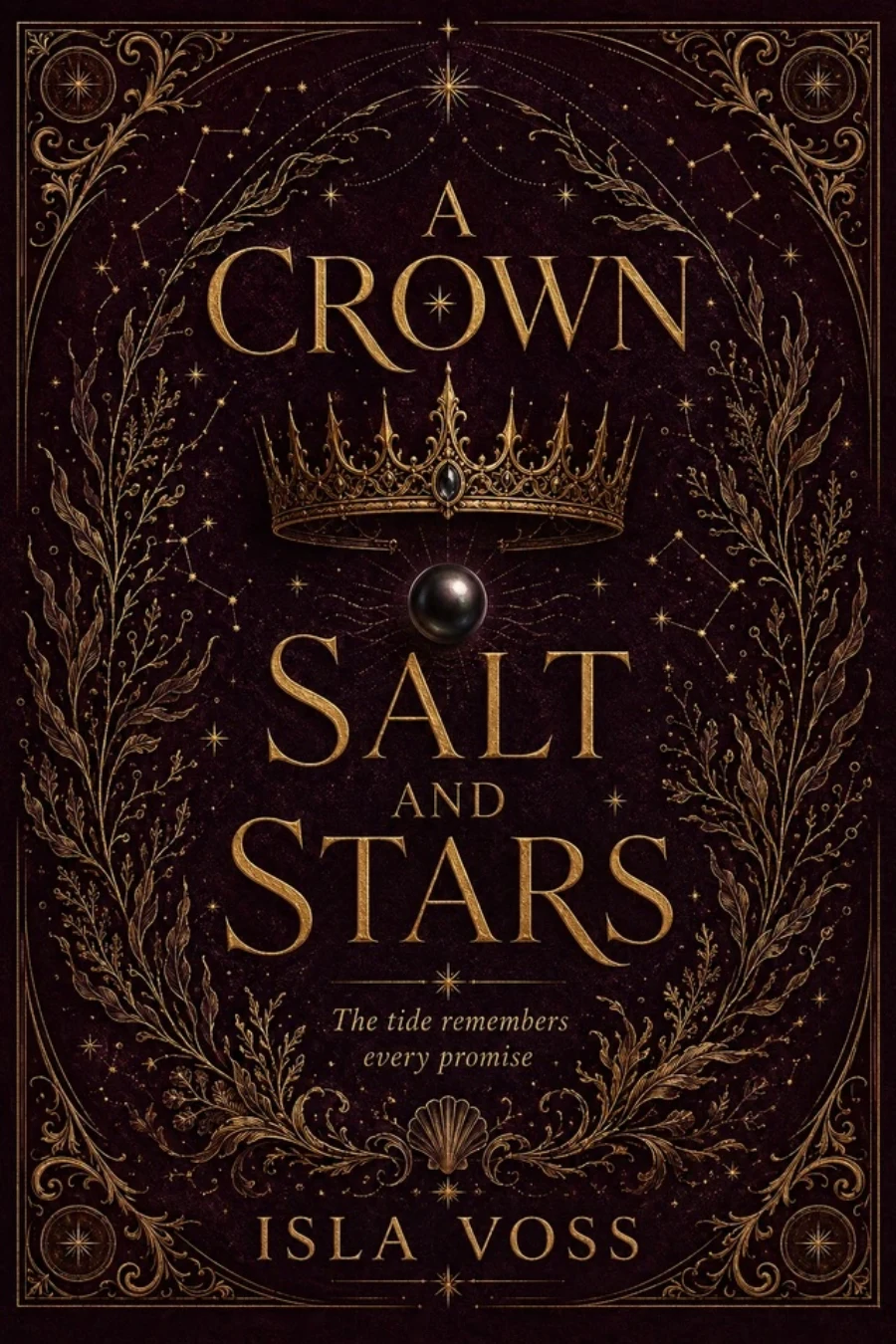
A Crown of Salt and Stars, a sample novel cover generated with Bookbind. A paperback and a hardcover can share the same front cover art.
Plan your book free and see the price before you pay.
Frequently asked questions
Is a hardback the same as a hardcover?
Yes. Hardback and hardcover mean the same thing: a book bound in rigid covers. Hardback is more common in British English, hardcover in American English.
Why are hardcovers more expensive than paperbacks?
Hardcovers cost more to make. On KDP, a 300-page black-ink hardcover costs $9.25 to print and the paperback $4.60, because the rigid case adds a higher fixed cost. Publishers and authors set higher list prices to cover the difference.
Do hardcovers sell better than paperbacks?
Amazon doesn't publish sales by format, and it depends on the book. Paperbacks cost buyers less, so they suit most readers; hardcovers suit gifts, keepsakes and fans who want a lasting copy. Offering both lets each reader choose.
Can a KDP hardcover have a dust jacket?
No. KDP prints hardcovers as case laminate, with the cover art printed directly on the boards and no dust jacket.
What is a case laminate hardcover?
A case laminate hardcover has its cover art printed on paper that is laminated and wrapped around rigid boards, instead of a cloth cover with a separate dust jacket. KDP's hardcovers are all case laminate.
Can I publish a hardcover picture book on KDP?
Only if it has at least 75 pages, KDP's hardcover minimum. The Writer's Digest word count guide puts a picture book at about 32 pages, so on KDP picture books are published as paperbacks.
Does a hardcover need a different ISBN from the paperback?
Yes. Each edition needs its own ISBN, and KDP offers free ISBNs for both paperbacks and hardcovers, or you can use your own from an agency such as Bowker.
Can I add a hardcover to a paperback I've already published?
Yes. From your KDP Bookshelf you can create a hardcover from an existing book, reuse the book details, give it its own ISBN and upload a hardcover cover file. The interior can stay the same if its trim size and page count fit KDP's hardcover limits.