A good book title tells the right reader what kind of book this is and makes them curious, in a few words. Start from your genre's patterns, write twenty options, then test the best three: search Amazon for clashes, check the title reads at thumbnail size, and keep title and subtitle under 200 characters, as KDP requires. Titles can't be copyrighted, so sharing one isn't illegal, but it makes your book harder to find.
We make Bookbind, an AI book creator that titles and covers books, and a free book title generator. The rules below come from KDP's, the U.S. Copyright Office's and the USPTO's own pages, checked on October 25, 2026. The example titles are from sample books generated with Bookbind or invented for this guide, so search Amazon before you use one.
What makes a good book title?
A good title does four jobs at once: it signals the genre, sparks curiosity, sticks in the memory and fits on a cover. Readers decide in seconds, often from a thumbnail, whether a book is for them, and the title is half of that decision.
- Genre signal. "Murder at the Marigold" can only be a cozy mystery. "A Crown of Salt and Stars" can only be fantasy. The words, rhythm and even the article ("A", "The") tell readers where they are.
- Curiosity or promise. Fiction titles raise a question ("The Last Light on Floor Nine": why is it the last?). Nonfiction titles make a promise ("Your First 100 Subscribers").
- Memorable and sayable. A title readers can say aloud, spell and search for is one they can recommend.
- Short enough to read small. KDP's keyword guidance notes that "customers are more likely to skim past long titles (over 60 characters)."
How do you come up with a book title?
Generate many options from inside the book, then cut ruthlessly. A process that works:
- List the book's key words. Write down the setting, the central object, the main character's role, the stakes and any phrase a character repeats.
- Mine your own pages. A striking line of dialogue or description often makes a better title than anything invented later.
- Name the promise. For nonfiction, write the result the reader wants in plain words, such as "make room for less" or "the first 100 subscribers."
- Borrow your genre's patterns. Use the table in the next section to turn your key words into the shapes your readers recognize.
- Write at least twenty. The first few ideas tend to be the obvious ones, so keep going past them.
- Say them aloud. Cross off anything awkward to say, easy to mishear or hard to spell.
- Shortlist three. Keep the three that best combine genre signal and curiosity.
- Test the shortlist. Search, picture it on a cover and ask readers, as described below.
If you're stuck at step one, the free book title generator suggests titles by genre from a one-line description.
What title patterns work in each genre?
Each genre has a few shapes its readers recognize at a glance. These patterns and examples show the conventions; the examples marked as samples come from books generated with Bookbind.
| Genre | Common patterns | Examples |
|---|---|---|
| Romance | A place or moment, an invitation, a playful role | Meet Me After the Rain (sample); The Florist's Second Chance; A Wedding in Wren Harbor |
| Cozy mystery | Murder or death plus a cozy setting, often a pun | Murder at the Marigold (sample); The Body in the Bookshop Window |
| Thriller | A precise detail, a time, a threat | The Last Light on Floor Nine (sample); Nine Days to Midnight; The Quiet Witness |
| Fantasy | A Crown, Throne, Heir or Song of something; "A [noun] of [noun] and [noun]" | A Crown of Salt and Stars (sample); The Cartographer of Impossible Doors (sample); Heir of the Drowned Kingdom |
| Science fiction | Space, signals, distance, silence | The Orbit of Silence (sample); The Last Signal from Kepler Station |
| Historical fiction | A role and an object, a place and a year | The Dressmaker's Last Letter (sample); The Clockmaker of Prague |
| Horror | Places that remember, ordinary things gone wrong | What the Well Remembers; The Hollow Under Briar Hill |
| Literary fiction and memoir | A quiet image or phrase | The House Between Tides (sample); Everything I Carried (sample) |
| Picture books | The hero's name and their adventure | Nori and the Night Train for Lost Socks (sample); Milo and the Moon Garden (sample) |
| Nonfiction | The result, the reader or the method | Make Room for Less (sample); Your First 100 Subscribers (sample); The Small Business of One (sample) |
Notice what the patterns have in common: concrete nouns, a hint of story or a clear benefit, and almost never more than seven words.
How do you write a subtitle for a nonfiction book?
The title catches the eye and the subtitle closes the sale: it says who the book is for and what they'll get. Nonfiction readers search for solutions, so the subtitle is where the plain-language promise goes:
| Title | Subtitle |
|---|---|
| The One-Page Statement of Work | How freelance designers price changes, protect their time, and keep the client happy |
| Past Module Three | A redesign workbook to turn passive course watchers into active finishers |
| The Pre-Call Memo | How to establish your competence before the discovery call starts |
All three are samples made with Bookbind. A good subtitle names the reader ("freelance designers", "course creators"), the result and, where it helps, the method. KDP's metadata guidelines say a subtitle "contains additional information about the content of your book," that title and subtitle together "must be fewer than 200 characters," and that the subtitle follows the same rules as the title.
Fiction usually skips the subtitle and puts a tagline on the cover instead, such as "Someone knows you are still awake" on The Last Light on Floor Nine. A tagline isn't part of the title, so it doesn't go in KDP's title or subtitle fields.
What does KDP not allow in a book title?
Anything that isn't the book's real title as it appears on the cover. KDP's metadata guidelines say the title field "should contain only the actual title of your book as it appears on your book cover," and they list what's prohibited, including:
- Repeating generic keywords like "notebook," "journal," "gifts" or "books"
- Unauthorized references to other titles or authors
- Unauthorized references to a trademarked term
- References to sales rank, such as "bestselling"
- References to promotions, such as "free"
- Only punctuation, HTML tags, or placeholders like "unknown" or "n/a"
For print books, the title must be on the cover, on the spine or front, and it must match the title you enter in KDP. If you publish several stories as one book, KDP asks you to say so in the title with a word such as "Collection" or "Compilation."
Can a book title be copyrighted or trademarked?
A book title can't be copyrighted, and the title of a single book can't be registered as a trademark, but a series title can. The U.S. Copyright Office's Circular 33 lists "the title or subtitle of a work, such as a book" among things that can't be copyrighted, because "words and short phrases, such as names, titles, and slogans," contain too little authorship.
Trademark law is different. The USPTO says on its page about title refusals that a mark "won't register if it's only used as the title of a single creative work," but "if your trademark is the name or title of a series of creative works, it may register." Its own examples: "The Tipping Point" is a single book, while "The Chronicles of Narnia" is a series.
So you can legally publish a book with the same title as another, but you shouldn't use a famous series name, a brand or a trademarked term. KDP's rules forbid unauthorized trademarked terms in titles anyway, and a title that collides with a bestseller hides your book in search results.
How do you test a book title before you publish?
Search for it, see it small, and ask the people you wrote it for.
- Search Amazon for the exact title. If a bestseller already owns it, change yours. If only a few small books share it, decide whether your genre and cover will set you apart.
- Search Google too. Make sure the title isn't also a well-known film, product or brand.
- Picture it as a thumbnail. Put the title on a rough cover and shrink it to the size of a search result. Long titles become unreadable first.
- Count the characters. Aim for well under 60 characters for the title itself, and under 200 for title and subtitle together.
- Ask real readers. Show your three finalists to people who read the genre and ask which book they'd click on, not which title they like.
How long should a book title be?
Usually one to six words, and well under KDP's 60-character skim line. Every example title in this guide fits. Longer titles work when the length is part of the joke or the charm, as in Nori and the Night Train for Lost Socks, but they need a cover that gives the words room.
Nonfiction can carry a longer subtitle, because buyers read the subtitle to check the book solves their problem. Keep the main title short and let the subtitle do the explaining.
Should books in a series have similar titles?
Yes: a shared pattern tells readers instantly that the books belong together. Series often repeat a structure ("A Crown of Salt and Stars", "A Throne of Ash and Tides"), a key word or a setting. KDP's series field links the books on Amazon, but readers notice the pattern on the covers first. Decide on the pattern before you publish book one, because KDP lets you change a paperback or hardcover's title only within 72 hours of first publishing it.
How does Bookbind title a book?
Bookbind suggests a title as part of the plan, letters it on the cover, and lets you change it at any time before you publish. Describe your book in a sentence, and the plan comes back with a title, chapters or pages, and the price, before you pay anything. If you rename the book later, the cover follows the new title in the background on the same art, so you don't lose the cover you chose. Before you publish, the KDP upload sheets in the download carry the title and subtitle exactly as they appear on the cover, which is what KDP checks.
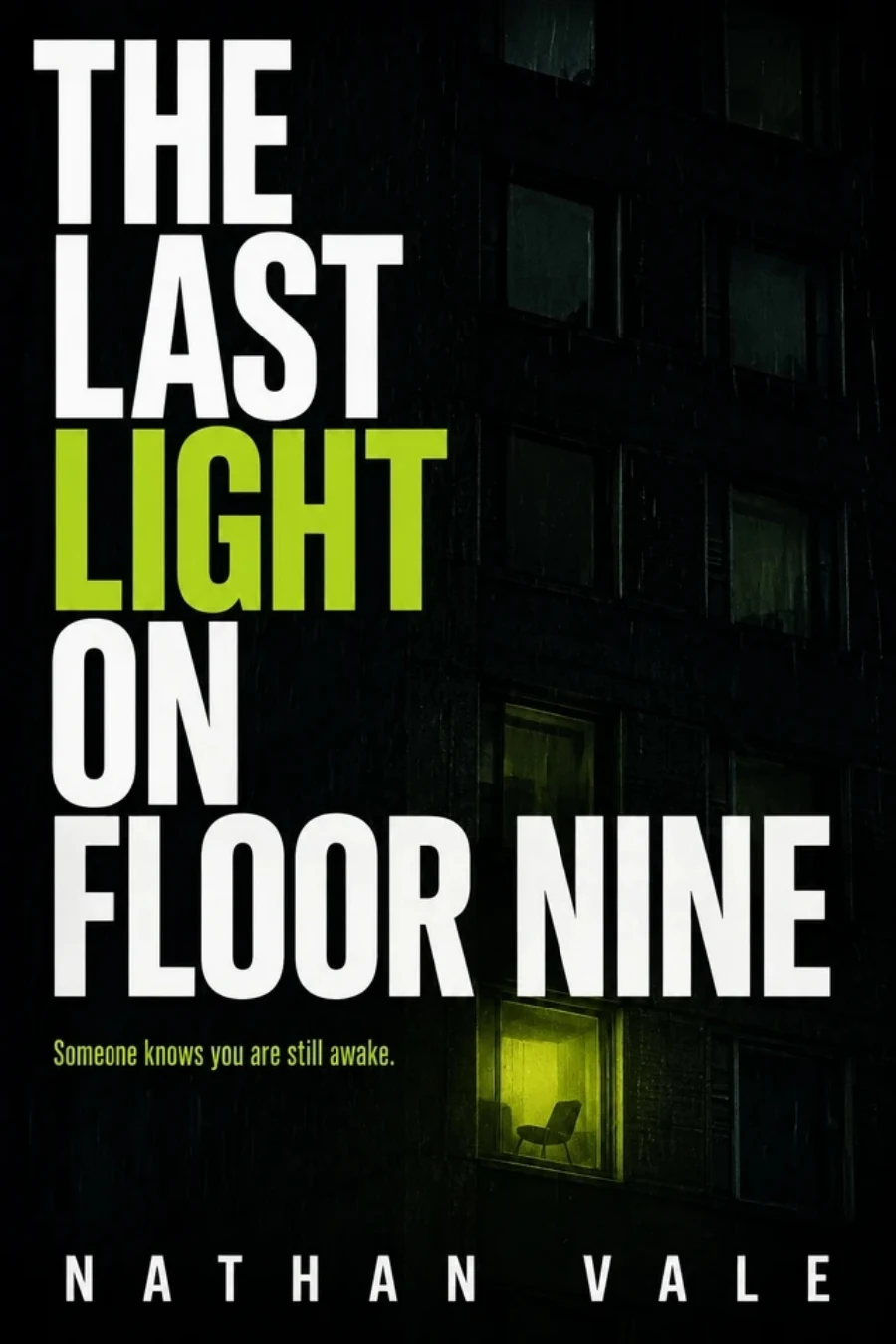
The Last Light on Floor Nine, a sample thriller cover generated with Bookbind. The title raises a question and the tagline sharpens it.
Plan your book free, or try the book title generator for fantasy, romance, mystery and more.
Frequently asked questions
How do I come up with a title for my book?
List the book's key words, mine your own pages for a striking phrase, use your genre's title patterns, and write at least twenty options. Shortlist three, then search Amazon for clashes and ask readers in your genre which book they'd click on.
Can two books have the same title?
Yes. Titles can't be copyrighted, so two books can legally share one. Sharing a title with a well-known book is still a bad idea, because yours will be hard to find and readers may feel misled.
Can you copyright a book title?
No. The U.S. Copyright Office says titles, names and short phrases can't be copyrighted. A series title can sometimes be registered as a trademark, but the title of a single book can't.
How long should a book title be?
Usually one to six words. KDP notes that customers are more likely to skim past titles over 60 characters, and KDP requires the title and subtitle together to be under 200 characters.
Should my book have a subtitle?
Most nonfiction books should, because the subtitle tells buyers who the book is for and what it promises. Fiction usually doesn't, and uses a tagline on the cover instead.
Can I change my book's title after publishing on KDP?
For a paperback or hardcover, only within 72 hours of first publishing, once the book is no longer in review. After that, KDP says you need to create a new edition, which means a new ISBN.
Can I use a famous phrase or a brand in my title?
A common phrase is fine, since titles and short phrases can't be copyrighted. A brand, a trademarked term or another author's series name isn't: KDP's guidelines prohibit unauthorized references to trademarked terms, other titles and other authors in the title field.
Can AI help me title a book?
Yes. AI is good at producing many options quickly in your genre's style, which is the hardest part of titling. Use a title generator to fill your list, then pick and test the finalists yourself.